Sloped Yard Landscaping Ideas: Retaining Walls, Terraces, and Erosion Control
Sloped yard landscaping ideas is an important consideration for homeowners, and this guide covers it in detail. A sloped yard can feel like a problem and an opportunity at the same time. On one hand, gradients complicate everything from mowing to planting, and unmanaged slopes shed soil, channel rainwater, and gradually wash your garden downhill. On the other hand, a well-designed slope offers drama, dimension, and visual interest that a flat lawn simply can’t match. The secret is working with the incline rather than fighting it.
This guide walks through the most effective ways to landscape a sloped yard, from structural retaining walls and terraces to planting and drainage strategies that keep erosion under control and turn a tricky gradient into a standout feature.
Table of Contents
Understanding Your Slope First
Before you design anything, understand what you’re working with. Gentle slopes under about 15 percent are relatively forgiving and can often be handled with planting and simple grading. Steeper slopes need structural intervention like retaining walls or terracing. Note where water flows during heavy rain, which areas stay wet, and where soil is already washing away. On very steep or unstable ground, consult a professional or structural engineer before building, because a failed retaining wall is dangerous and expensive.
Retaining Walls: The Structural Backbone
Retaining walls are the workhorses of slope landscaping. They hold back soil, create level areas, and prevent the gradual creep of earth downhill. In 2026, homeowners typically spend $25 to $70 per square foot for a professionally built retaining wall, depending on material and height.
Common options include:
- Concrete blocks: Affordable, durable, and available in interlocking systems designed for easy installation.
- Natural stone: Beautiful and long-lasting, but more expensive and labor-intensive.
- Timber sleepers: Warm and natural-looking, ideal for lower walls, though they have a shorter lifespan.
- Poured concrete: Extremely strong for tall walls, and can be faced with stone or render for a better look.
Any wall over about three to four feet usually requires proper engineering, drainage, and often a permit, so check local regulations before building.
Terracing: Turning a Slope Into Usable Space
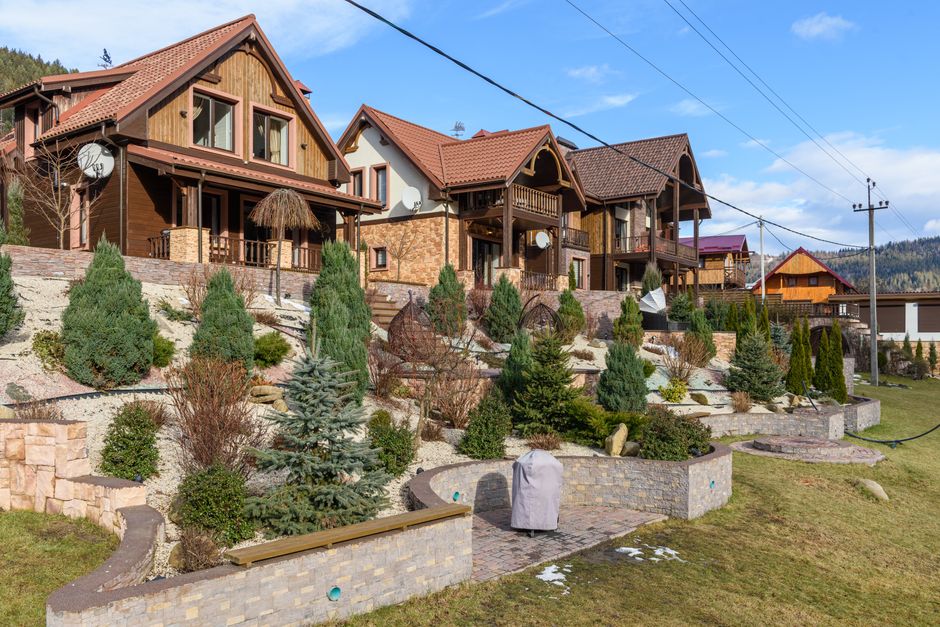
Terracing divides a slope into a series of flat, stepped levels, much like the rice terraces of Southeast Asia scaled down for a garden. Each terrace is held by a low retaining wall and creates a usable platform for planting, seating, or a patio.
Terracing is one of the most effective ways to reclaim a steep, unusable slope. It slows water as it moves downhill, reduces erosion dramatically, and transforms a single awkward gradient into a collection of intimate garden rooms. The trade-off is cost and labor, since multiple walls and significant earthworks are involved, but the payoff in usable space is substantial.
Planting for Erosion Control
Plants are nature’s own erosion control, and the right species can stabilize a slope beautifully. Deep-rooted ground covers, ornamental grasses, and spreading shrubs knit the soil together and slow surface runoff.
Good choices include creeping juniper, ornamental grasses, vinca, and native wildflowers with fibrous root systems. On steeper banks, plant through a biodegradable erosion-control fabric that holds soil in place while roots establish. Avoid leaving bare soil exposed; even a temporary cover crop is better than nothing while permanent planting takes hold.
Managing Water and Drainage
Water is the enemy of any slope, and controlling it is essential. Uncontrolled runoff carves channels, undermines walls, and floods the low points of your yard.
Effective drainage strategies include:
- French drains: Gravel-filled trenches with perforated pipe that redirect subsurface water away from vulnerable areas.
- Swales: Shallow, planted channels that slow and absorb runoff.
- Weep holes and gravel backfill: Built into retaining walls so water pressure doesn’t build up behind them.
- Rain gardens: Planted depressions at the bottom of a slope that capture and soak up excess water.
Every retaining wall must have proper drainage behind it; trapped water is the single most common cause of wall failure.
Steps, Paths, and Access
A sloped yard is only enjoyable if you can move around it safely. Well-placed steps and paths turn a steep incline into an inviting journey through the garden. Use natural stone treads, timber sleepers, or poured steps, and keep the rise consistent for comfortable footing. Gently switch-backing paths make a steep climb feel gradual, while landings provide places to pause and enjoy the view. Good lighting along steps is essential for safety after dark.
Low-Maintenance Slope Ideas
If you’d rather not fuss over a slope, design for minimal upkeep. Cover banks with dense, spreading ground cover that never needs mowing. Use gravel or mulch with drought-tolerant plants for a tidy, low-water look. Boulders and rock groupings add structure and interest while requiring zero maintenance. These approaches are ideal for slopes that are difficult or dangerous to access with a mower.
Common Mistakes to Avoid on Sloped Yards
Even well-intentioned projects go wrong when a few key principles are ignored. The most frequent mistake is building a retaining wall without adequate drainage behind it, which leads to hydrostatic pressure and eventual collapse. Another is stripping a slope of all vegetation before new planting is ready, leaving bare soil to wash away in the first storm. Homeowners also tend to underestimate how much earthwork terracing involves, blowing budgets when they discover the labor required. Finally, building walls taller than local codes allow without a permit or engineering can trigger fines and forced demolition. Planning around these pitfalls from the start saves money, time, and heartache.
Conclusion
A sloped yard is not a landscaping curse; it’s an invitation to create something with depth, character, and genuine visual drama. Start by understanding your gradient and where water flows, then combine structural solutions like retaining walls and terraces with erosion-controlling planting and smart drainage. Add safe, attractive access with steps and paths, and choose materials and plants suited to your maintenance appetite. Handled thoughtfully, that awkward incline can become the most striking and memorable part of your entire property.